
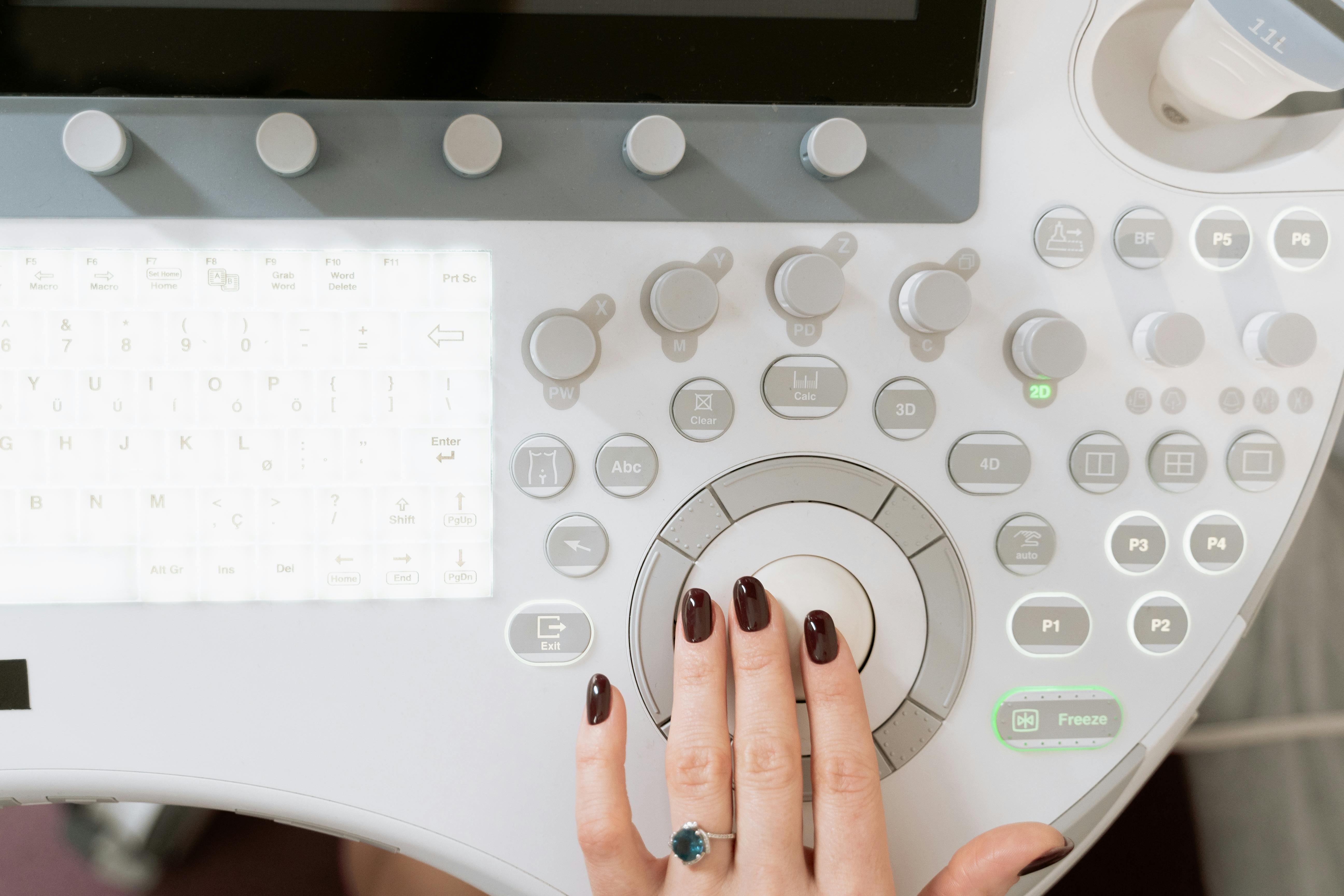
When an ultrasound machine begins missing inputs, lagging after key presses, or reacting inconsistently to routine operator actions, engineers often assume the problem is somewhere deeper in the console logic. In many cases, the control-panel layer itself is already unstable and is creating symptoms that look much larger than the real fault.
That is why control-panel instability wastes so much time in the field. The machine can still boot, load menus, and appear generally usable, yet become unreliable once the operator starts moving through a real exam workflow. Because the behavior shows up as delayed response rather than a hard stop, it often gets treated as software hesitation, interface-board trouble, or general system aging before the panel side has been ruled out properly.
Recommended replacement option: FRU REMOTE BOX OMEGA by GE Healthcare
What this failure pattern usually looks like
A common pattern is that startup appears normal, but repeated key presses, mode switching, depth adjustment, or menu navigation begin to feel uneven. Some inputs register late. Others require a second press. In some cases, the machine changes state unexpectedly because the signal path is no longer stable enough to translate operator actions cleanly.
Why the fault often gets blamed on deeper hardware
Visible response problems naturally push attention toward the main board, interface layer, or software stack. But when the machine only becomes unreliable during actual human interaction, the input layer deserves much earlier attention. A weak control panel, unstable connector path, or degraded local support section can imitate broader system trouble without the main board being the real starting point.
What to inspect first
Check whether the failure is tied to specific buttons, rotary actions, or workflow transitions rather than constant background instability. Inspect connector seating, front-panel cable condition, local wear, and whether the response worsens with repeated use or warm runtime. If the symptom clusters around human input rather than passive idle behavior, the inspection path should begin at the control layer.
Why earlier replacement decisions save effort
Once operators stop trusting the panel response, the machine becomes much harder to evaluate with confidence. Teams repeat the same workflow steps, suspect multiple boards, and spend time validating deeper layers when the real issue is still at the front end. Replacing the unstable control-side component earlier can prevent a much wider repair loop.