
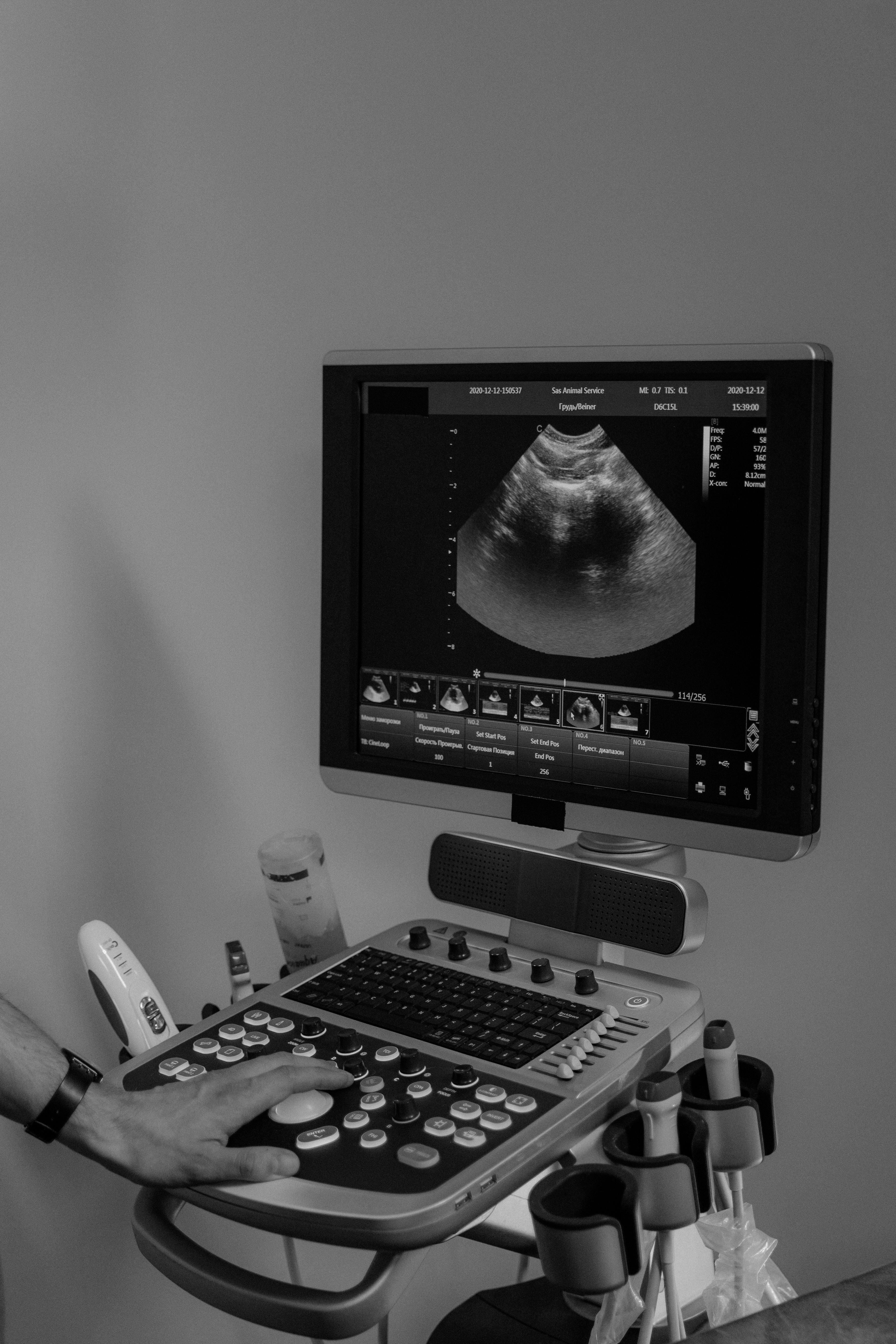
Why Temporary Recovery After Restart Often Points to Hidden Runtime Sensitivity in Ultrasound Systems
A common observation during ultrasound service is that a machine will fail, power cycle, then come back online and appear to function normally again—at least for a while. That temporary recovery is easy to misread as evidence the problem was minor or transient. In repair terms, the opposite is often true. The fact that a system improves after restart can actually be one of the clearest early indicators that a real, reproducible fault exists—one that only becomes visible under specific runtime, thermal, or electrical conditions.
The key insight is simple: recovery after restart is not proof of health. It is often a diagnostic clue pointing to instability that hides during cold start but reappears as the system heats up, runs longer, or settles into a steady state. Treating restart recovery as “the problem went away” can delay the real diagnosis and allow a marginal fault to progress toward harder failure.
What the restart-recovery pattern usually looks like in practice
The pattern is familiar across many sites. A technologist or engineer may report any of the following:
- The machine loses image, locks up, or shows a specific fault code, then after power-off and power-on it returns to normal operation.
- After restart, the system works normally for a limited time—sometimes minutes, sometimes longer—before the same symptom returns.
- The fault becomes easier to reproduce after a warm-up period or after running a specific protocol.
- The issue only appears after the system has been on for a certain duration, not during initial boot or short idle.
- Different operators notice the same trend: the machine seems fine first thing in the morning, then develops issues as the day progresses.
These observations matter because they suggest the fault may not be a simple broken component or a hard failure. Instead, the behavior often points to a weakness that only manifests under load, after thermal stabilization, or when certain internal voltages, clocks, or signals have had time to drift.
Why teams often misread this pattern at first
The most common mistake is treating restart success as evidence the problem was minor, temporary, or operator-related. This assumption is understandable but dangerous because it reverses the diagnostic meaning of the symptom.
Several factors contribute to this misread.
First, restart success feels like relief. If a machine that was completely non-functional comes back online, the natural reaction is to celebrate and assume the worst has passed. That emotional response can interfere with objective follow-up.
Second, the initial failure often occurs during a busy scan or under real workload, making it disruptive and memorable. The restart test, by contrast, usually happens in a calmer service setting. Comparing the two without context can make the post-restart state seem “better than before” when in reality it may only be temporarily stable.
Third, intermittent faults are harder to pin down than solid failures. If a component works after power cycling, teams may conclude it is not broken—and stop looking. In reality, many marginal faults (such as cracked solder joints, marginal voltage regulators, aging capacitors, or timing-sensitive logic paths) only misbehave after the system has had time to settle into an unstable state.
Fourth, there is a tendency to equate “no error code” with “no problem.” If the system restarts cleanly and does not immediately throw a fault, some interpret that as a full recovery. But many runtime-sensitive weaknesses do not trigger hard faults right away; they may instead cause image noise, measurement drift, inconsistent Doppler, or delayed response—issues that are real but do not always generate a hard trip.
What restart recovery often suggests about the underlying fault
When a system improves after restart but then degrades again with use, the behavior often points to one or more of the following underlying conditions:
- Runtime-sensitive instability: a fault that only appears after the system has been on long enough for temperatures, voltages, or internal states to drift.
- Thermal sensitivity: a weakness that emerges after warm-up, such as a marginal connection, aging capacitor, or timing path that drifts with heat.
- Electrical margin loss: a power rail, reference voltage, or clock signal that starts within tolerance but drifts out of spec after sustained operation.
- Logic or timing path vulnerability: a signal path that works when cold but begins to misbehave as propagation delays accumulate or as noise margins shrink.
- Mechanical stress relaxation: a connector, cable, or board-level interface that seats differently after thermal cycling and begins to exhibit intermittent continuity.
The practical value of this pattern is that it turns an operator observation—“it works after restart”—into a service direction. Instead of treating recovery as the end of the story, teams can use it as a starting point: if the machine improves after cold start, then the fault is likely hiding in a condition that only appears after power-on stabilization.
What to inspect first when restart recovery is observed
Good diagnosis still starts with narrowing. Before assuming the fault is in any specific module, technicians should confirm several things about the restart-recovery pattern itself.
Begin with timing. How long does the system run after restart before the symptom returns? Does the issue return faster after a specific workload? Is the downtime consistent, or does it vary with ambient temperature, scan depth, or probe type?
Next, check reproducibility. Can the fault be made to return more quickly by running a particular protocol, increasing scan depth, or leaving the system on idle? Does warm-up alone trigger the issue, or does it require actual scanning or sustained processor load?
Then isolate variables. Does the problem return with the same probe, or does it change when a different transducer is used? Does it appear on all ports, or is it limited to one? If the fault follows the probe, the issue may be probe-side; if it stays with one port regardless of probe, the issue may be system-side.
Also consider environmental factors. Does the issue behave differently in a cold room versus a warm one? Does it improve if the system is powered on in a well-ventilated area versus an enclosed rack? Thermal sensitivity often shows up in these comparisons.
Finally, check whether the symptom changes with input or output load. Does the issue appear only during certain types of scans (e.g., cardiac, vascular, obstetric)? Does it worsen when the system is processing high data rates, when color Doppler is active, or when multiple gates are in use? Load-dependent behavior often points to marginal electronics, timing paths, or power regulation rather than a single broken part.
Why early attention improves repair efficiency and reduces cost
Treating restart recovery as a solved problem can lead to avoidable expenses and downtime. If the real fault is marginal and only appears after use, delaying diagnosis increases the chance that:
- The symptom progresses from intermittent instability to repeatable failure
- Secondary effects develop (such as overheating, data corruption, or operator workarounds)
- More extensive testing becomes necessary once the fault hardens
- Users lose confidence in the system and begin avoiding certain exams or probes
- Service visits increase because the issue keeps recurring under use
By contrast, investigating the pattern early—while the machine still shows clear recovery after restart—often allows technicians to catch the fault while it is still readable. The window between “works after cold start” and “always fails” is often the best time to isolate runtime-sensitive weaknesses before they progress to harder failure or mask themselves with secondary effects.
A practical engineering takeaway
When an ultrasound system shows temporary recovery after restart, the most useful question is not whether the problem is gone. The better question is: what condition is the system leaving when it powers on cold, and what condition does it enter after warm-up or sustained use that makes the fault visible? Treating restart recovery as a diagnostic clue—rather than evidence of minor trouble—helps teams avoid the trap of mistaking temporary stability for true health. Early attention to this pattern improves the chances of isolating the real fault while the symptom pattern is still readable and before the machine forces a less readable, more expensive failure mode.