
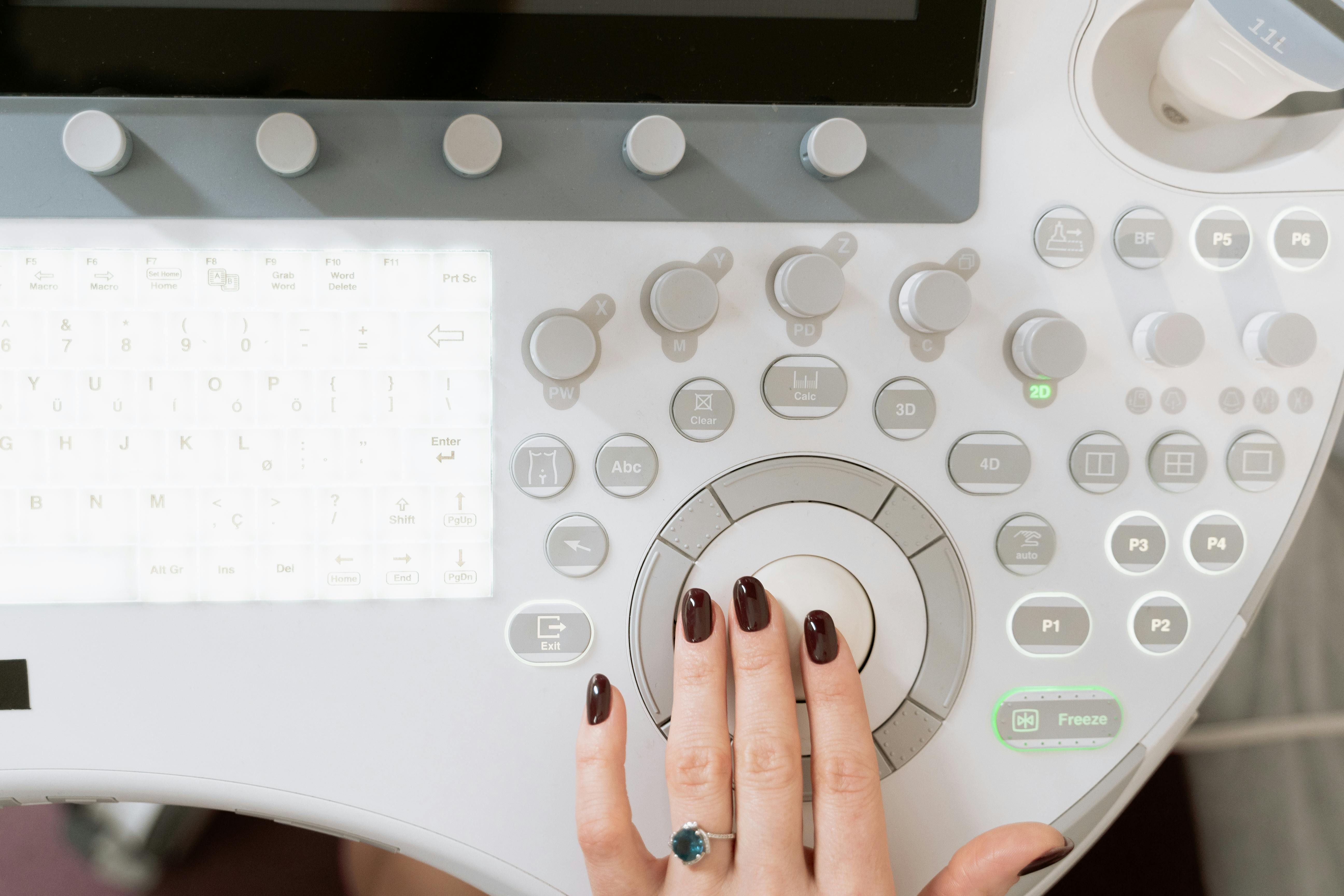
When an ultrasound console starts missing button inputs, freezing navigation response, or acting inconsistent during routine workflow, teams often worry about the main board first. In practice, the control panel itself can be the weaker layer. Once panel contacts, local connectors, or the operator-input path begin failing, the machine may still boot and image normally while commands become unreliable enough to distort diagnosis.
That is why control-panel failure is easy to misread. The system still looks alive, which makes the fault seem logical or intermittent rather than physical. But a failing input surface can create confusion across every step that depends on stable operator interaction.
Recommended replacement option: FRU NEW FASTLINK ADAPTER FOR IB WITH NATIVE DL 8 by GE Healthcare
What this failure pattern usually looks like
A common pattern starts with the highest-use controls. Freeze, save, gain, or navigation inputs require repeated presses, work differently across sessions, or respond after a slight delay. Sometimes the symptom worsens after longer use, which points toward wear, contamination, flex stress, or local connector instability around the panel assembly.
Why engineers misdiagnose it
Because imaging and boot behavior may still appear normal, teams chase software lag, interface-board instability, or broader console problems before they inspect the physical input layer properly. The result is wasted time around secondary symptoms while the real weak point keeps sitting under the user’s hand.
What to inspect first
Check tactile consistency, panel flex, connector seating, local contamination, and whether specific high-use zones fail first. If command reliability changes with pressure, heat, or repeated use, the control panel should move much higher on the checklist.
Why early replacement saves time
Once control-panel input becomes unreliable, every workflow-based test becomes harder to trust. Operators hesitate, engineers repeat steps, and false suspicions spread deeper into the system. Replacing the unstable input layer earlier is often cheaper than continuing to diagnose around it.